Guides ·
How to write a lost item notice and keep proof in reserve
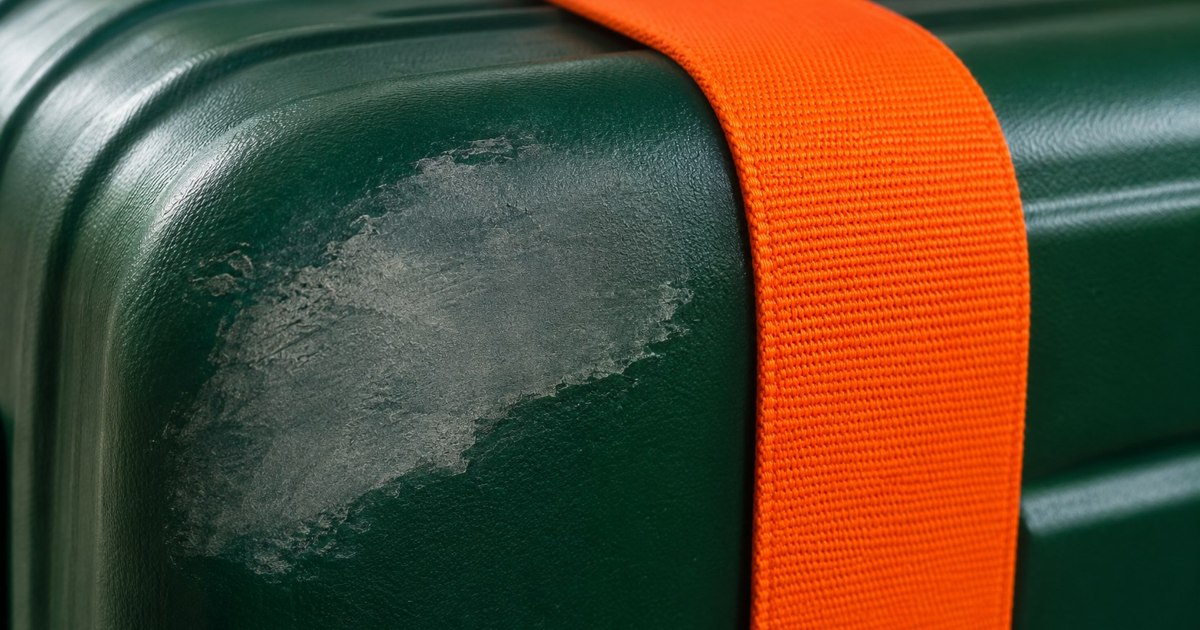
Put a photo of your lost suitcase online and a few hundred people will know what to look for. Some of them will also see the scuff, the sticker or the luggage tag you were planning to use as proof. So write the notice twice. One version is for strangers and should be easy to recognise at a glance in a hotel lobby or on a bus. The other stays in your own records, so that when a finder gets in touch you can show you knew something about the bag before they did.
Decide what somebody passing by would recognise
Picture who actually saw it. A guy cutting through a hotel lobby might remember "green hard-shell, orange strap" and that's about it; he didn't crouch down to look at the little nick on the left rear wheel. So the strap goes in the notice. The nick stays with you, and later it's how you tell whether a reply is real.
Place and time work the same way. "Ottawa, sometime last week" gives a reader nothing to go on; your street address gives away far more than the search needs. Aim for what you'd tell a friend who knows the neighbourhood: the block, the café, the bus route, a two-hour window. FoundWall rounds the last-seen point to an area at least 1.5 km wide and never publishes an exact coordinate, which takes care of the precise spot for you.
Describe what you saw and leave conclusions out. If you left a bag on a bench, went back ten minutes later and the bench was empty, say exactly that. Someone may well have carried it to a front desk. A headline that says STOLEN can put that person off writing to you, and it claims more than you know. The lost item reporting process shows how a public notice and the private message thread fit together.
Prepare a public photo and retain the original
Open the photo full size before you upload it, on a laptop if you can. A luggage tag that is unreadable on a phone at normal zoom can be perfectly legible once enlarged. Check the handle, then check the background: a child's name on a sports bag, a boarding pass on the kitchen counter, a parcel label with an address. Crop, then open the cropped copy and look again, because crops miss things.
An older photo of your own item usually beats a product shot from the store. The store image may be the right model, but it will never show the patch you sewed on in March or the zip pull you replaced. If every photo you have shows something private that's hard to crop, pick a different angle; a side panel still shows shape, colour and material. And if you do use a manufacturer image you're allowed to share, say in the caption that it shows the model.
- Keep the original with your private notes and save the public copy under a different filename, so you can find the full version fast if someone asks.
- Read your description with the public photo next to it. Sometimes the detail you meant to keep back is sitting right there in the picture.
- Hold back a second detail too, something you could describe from memory or back up with a dated photo (the patch under the lining, say).
- Read the notice as if you were the finder. There should be an obvious way to reply that doesn't involve you posting your phone number.
That's the hard part done. Start a lost item notice with your public description and the cropped photo; the form asks for four things and takes a couple of minutes, and any serial or chip number you add is hidden from everyone except you (and police, if you choose). The trust and safety page covers what happens when a finder writes.
Ask a finder a question they can answer independently
Say someone writes that a bag like yours was handed in. Resist the urge to reply with every hidden feature it has. Ask them to describe one thing they can actually see, or which lost-property desk took it. If it went to a staffed desk (a hotel, a transit office, a library), contact that desk through its own published number. For both of you that is usually easier than arranging a handover in a parking lot.
Some things you should never send, however friendly the message. ID documents, for one. If an official desk has an identification process, ask the desk what it needs. Be wary of anyone who says they have your property and asks for money first: an advance fee, a gift card, crypto, a verification code, an odd shipping charge. FoundWall's safety rules treat all of those as high risk. And a person who found a closed bag has no reason to go through it to answer your test, so pick a question about the outside.
A lost-property clerk may have two green cases on the shelf, and neither may be yours. If the wheels look wrong, say so; the clerk puts the case back for its real owner and nobody has to argue about it. Keep the messages and any timing details, and note what matched your records and what didn't. If you think the item was stolen, follow the safety guidance for possible sightings and give what you have to police. Meeting a suspected thief yourself puts you and everyone nearby in a situation the notice was never meant to create.
Update one notice as the search changes
When you remember something new, add it to the notice you already have, as long as it helps people recognise the item. Four slightly different posts in four places leave readers unsure which one is current. Keep a list of every desk and transit office you've called, with dates, so that when somebody says "I gave it to the counter at the station," you know whether that counter has already checked.
When the bag is back, close the notice, or people will keep chasing an old lead for weeks. Jot down for yourself what clinched it (the crooked strap, the older photo, the desk it was handed in at). The update can leave all of that out. "Found, thanks everyone" will do for the neighbours who kept an eye out.
Create your FoundWall report with the description a passer-by can use. When someone writes back, open the original photo, zoom in on that wheel and compare it with what they tell you. The nick you left out of the notice is the part that does the work.